
Dickson County Bench Warrants Explained
A bench warrant is court process, not a verdict. It usually follows a missed appearance or some other duty the court set that went unmet. Tennessee Code § 40-7-118(g) directs a bench warrant when a person cited in lieu of arrest skips court or required booking. In Dickson County, the record sits with the court that set the date. There is no single countywide public search page for it. General Sessions runs the lower-court criminal, traffic, and probation dockets. City municipal courts handle local ordinance and traffic cases. A family or civil contempt question may belong in Chancery instead of the criminal clerk's office, so it pays to ask where the file lives before you call.
General Sessions’ 24/7 Warrant System
Dickson County traces its General Sessions Court to a private act passed in 1957. Four judicial commissioners support criminal-warrant issuance every day of the week, 24 hours a day. That covers how warrants get issued outside regular clerk hours. It does not mean the clerk counter or public phone line never closes. The General Sessions page posts weekday clerk hours along with Tuesday traffic court, Thursday criminal municipal court, and Friday criminal county court. Confirm any date with the clerk before you travel.
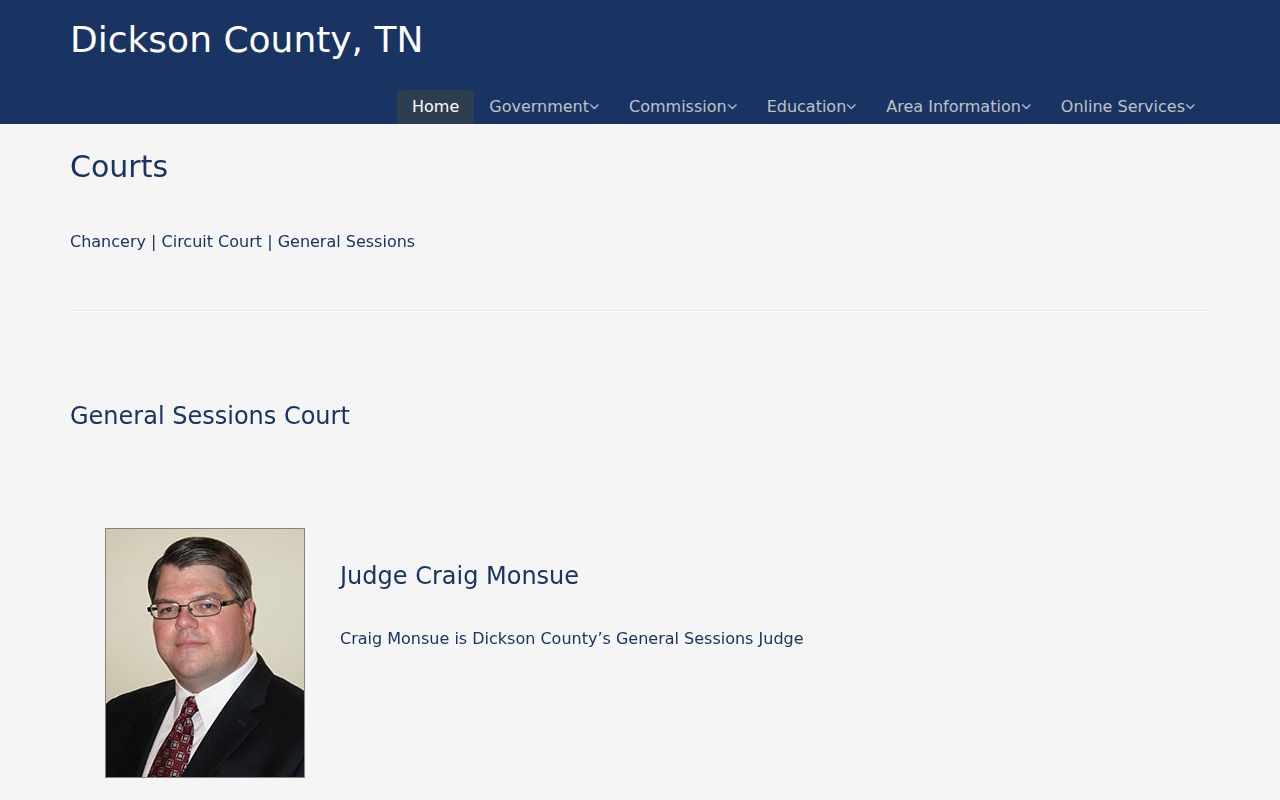
The Dickson County page shows the court's schedule and contact route. It is not an individual warrant list.
How Dickson County Bench Warrants Are Issued
A missed setting may lead a judge to issue process. The exact record still depends on the court and the case. The path can start with a citation, a summons, a bond condition, a probation setting, or an order. Ask the Dickson County clerk whether the event is logged as a bench warrant, FTA process, a probation matter, or municipal process. The county calendars hint at likely routing. A schedule alone cannot show whether a warrant issued. Give the clerk the original court date, the issuing agency, and any case or citation number you have.
Dickson County Bench Warrants and Circuit Capias Compared
Both papers can direct an officer to bring a person before a court. The stage and the clerk differ. Dickson County lower-court missed appearances are commonly called bench or FTA warrants. Rule 9 governs a capias or summons after indictment or presentment, and the Circuit Court Clerk holds those felony and misdemeanor files.
| Question | Bench / FTA | Circuit capias |
|---|---|---|
| Common stage | Missed lower-court, traffic, or probation setting. | Indictment/presentment or later Circuit Court setting. |
| First clerk | General Sessions or the issuing city court. | Dickson County Circuit Court Clerk. |
| Next step | Ask about a reset, appearance, bond, or motion. | Ask the Circuit clerk and counsel about the court’s direction. |
Bench Warrants and Arrest Warrants Compared
An arrest warrant generally follows a sworn complaint and judicial probable-cause review. A bench warrant more often follows a missed court duty or a failure to comply with an order. Either one can end in an arrest. Ask which process actually appears in the Dickson County case rather than trusting a broad label. The blank Tennessee bench-warrant form shows the fields courts use: court, case, defendant, bond, initial appearance, charge, and officer return. It is only a schema, not proof of a live warrant.
Which Dickson County Court Holds a Bench Warrant
General Sessions sits at the Dickson County Justice Center, 500 Spring Street, Charlotte, and its clerk answers at 615-789-5414. Circuit Court shares the building, and its clerk is at 615-789-7010. Dickson Municipal Court takes city ordinance and traffic matters. White Bluff holds court at Town Hall, and Burns routes town-court questions through its police and administration offices. Chancery and Juvenile Court are separate. The Clerk & Master handles family, child-support, probate, and civil files. Juvenile matters carry special confidentiality rules. Do not send a family or juvenile question to the general criminal warrant desk in Dickson County.
Resolving a Dickson County Bench Warrant
Call the issuing clerk before you appear. Ask for the process type, case number, issue date, bond or release condition, and next court date. Find out whether a reset, a payment, an attorney-arranged appearance, or a motion is required. Only the court can recall or quash a Dickson County bench warrant. The Sheriff's office can confirm service status, but it cannot set the court date or promise a recall.
Get the procedure first. Dickson County does not publish local bond amounts or walk-in surrender hours, so confirm the route with the clerk, Warrants Division, jail, or counsel.
Before a Dickson County Warrant Surrender
The public jail page confirms 24-hour staffing. It does not describe a public bond window, accepted payment, or a safe-surrender process. Staffing is not a promise that a person can walk into the Dickson County jail, post an unknown amount, and leave. Ask whether counsel should arrange the appearance. Ask what identification, paperwork, or booking steps apply. If bond is set, confirm the current amount plus the place and method of payment. A bond addresses release and appearance conditions, and it does not automatically end the underlying case. Keep a receipt, and write down the next court date.
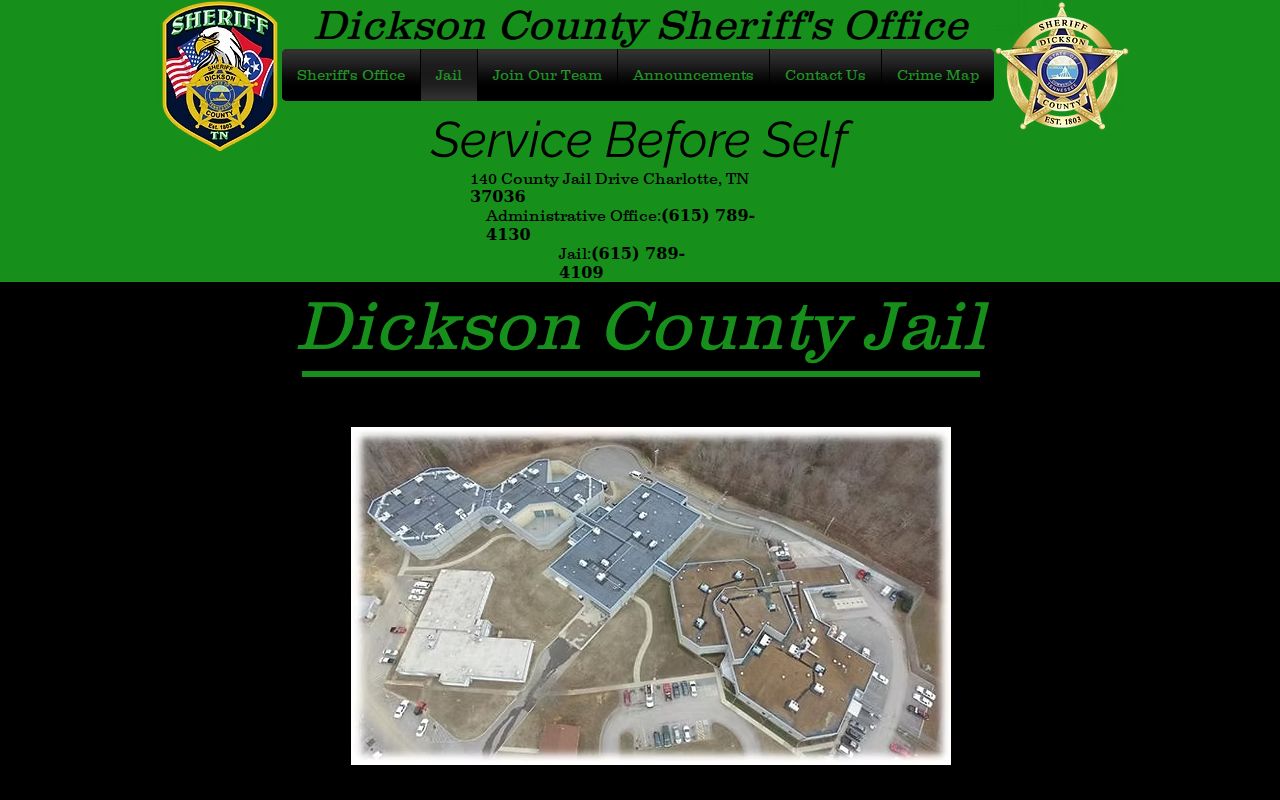
The Dickson County jail page gives facility information, not a warrant surrender or bond promise. For a broader route, see the Dickson County warrant overview.
Finding the Court That Issued the Warrant
Warrant paper always has a home court. Match the citation, case number, or court notice to the clerk who holds that file in Dickson County. General Sessions matters start at 615-789-5414. For felonies and capias records, call 615-789-7010. City tickets belong first with the municipal clerk named on the ticket, while Chancery family and child-support process goes to the Clerk & Master at 615-789-7011. The Tennessee AOC clerk finder sends warrant and court-document questions to the clerk in the county where the case began. One more route exists: the Sheriff's Warrants Division at 615-740-4862 can confirm service.
Dickson County Child-Support and Juvenile Process
Not every enforceable court order in Dickson County is a criminal bench warrant. The Clerk & Master keeps the Chancery side. That office handles domestic relations, child support, probate, and civil process, and a contempt or body-attachment question should go there so the correct file and rules can be identified. Juvenile records work differently. Tennessee Rule 114 governs access to juvenile proceedings. Supreme Court Rule 34 covers public court records, with protected exceptions for certain matters. Ask the clerk what can be inspected or copied.
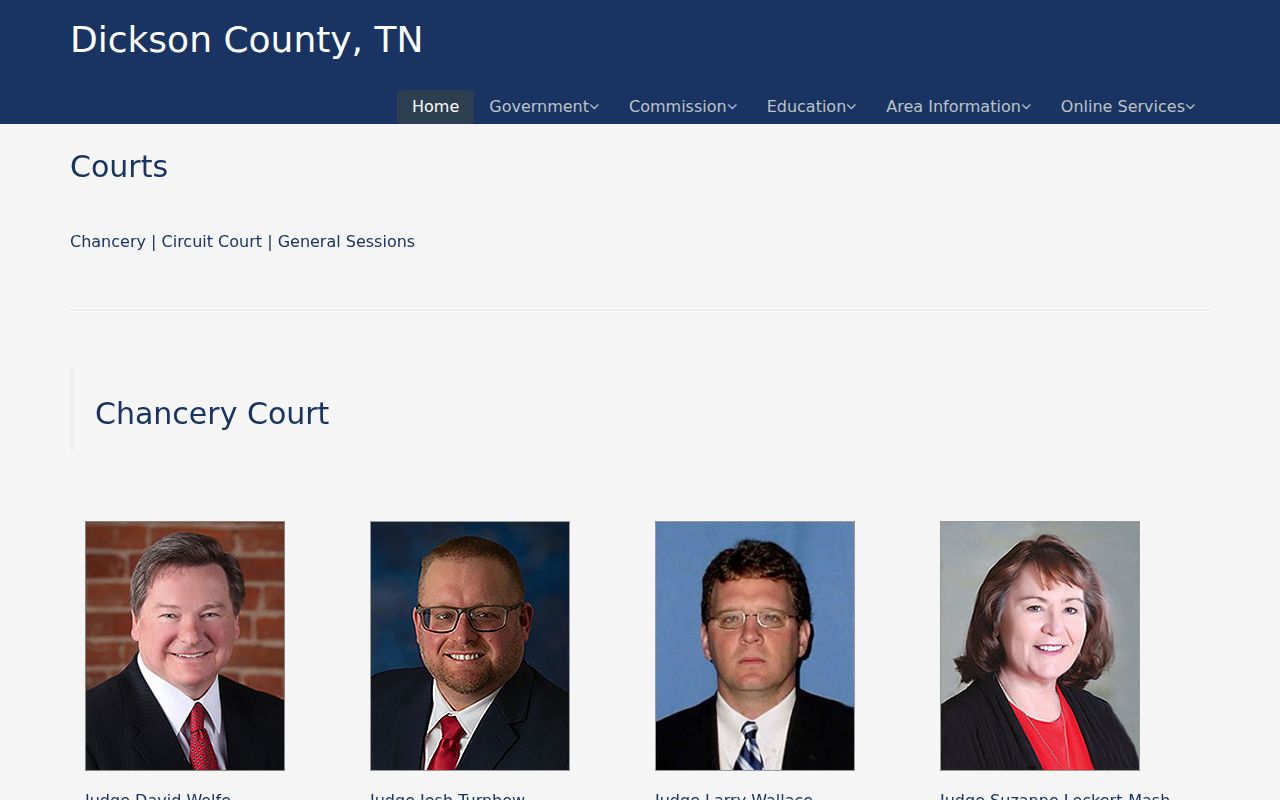
The Dickson County Chancery page routes civil and family matters to the proper office. Those cases are not General Sessions criminal cases.